Learning to fire a kiln
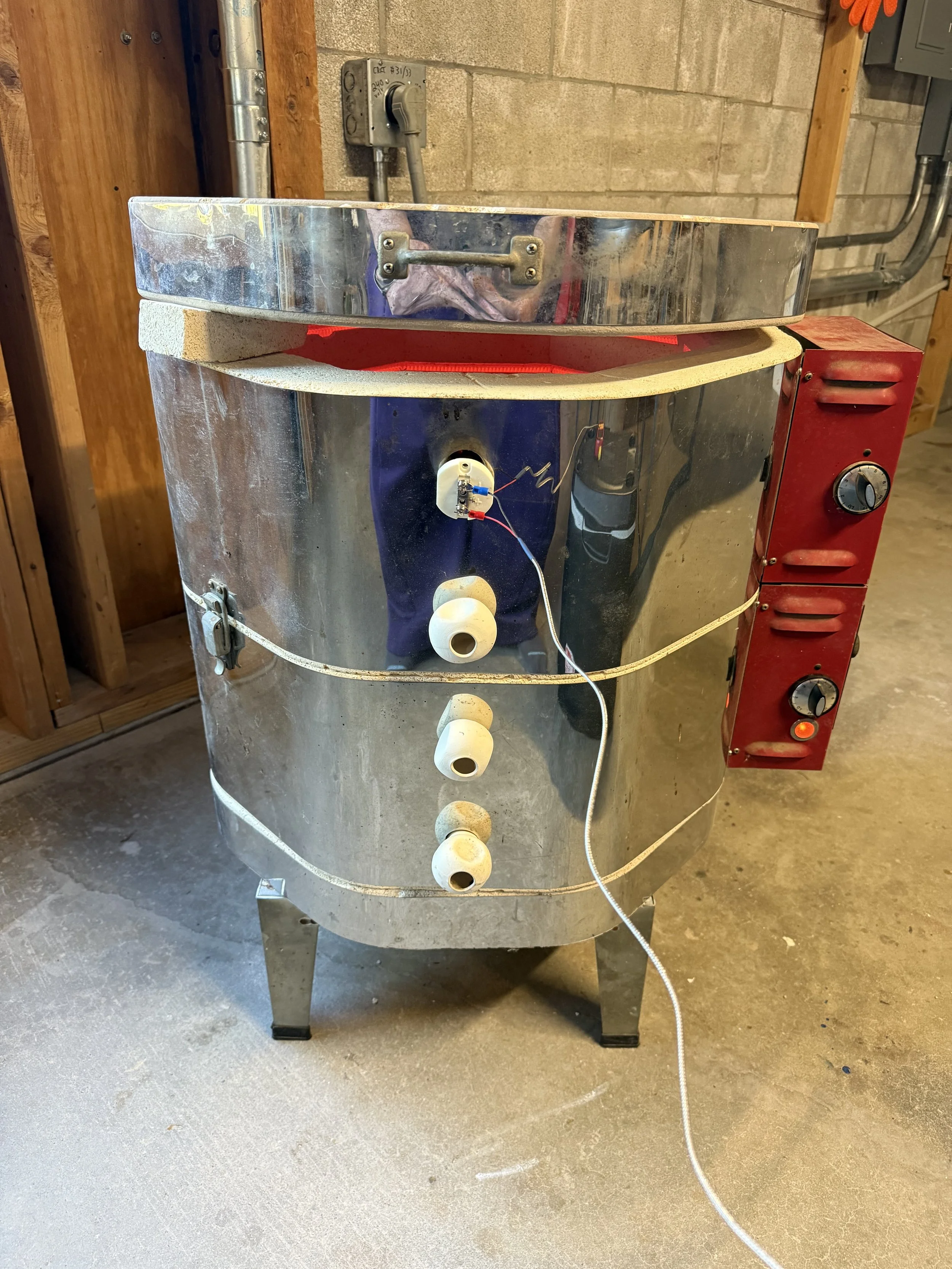
These past few weeks I’ve been learning a lot about kilns and a little about glazes. Nowadays one can get a kiln with computer controllers that you program with a touch screen to fire on a specific schedule. The kiln in my basement is a manual Skutt 818, basically bands of electrical elements surrounded by firebrick and a couple of knobs with a heavy-duty power cord attached. It gets HOT, above 2300 degrees, and when cooking it’s an otherworldly orange inside. (Below: the kiln is just getting started. Once I lower the lid, I’ll only get glimpses of the molten environment through a peephole).
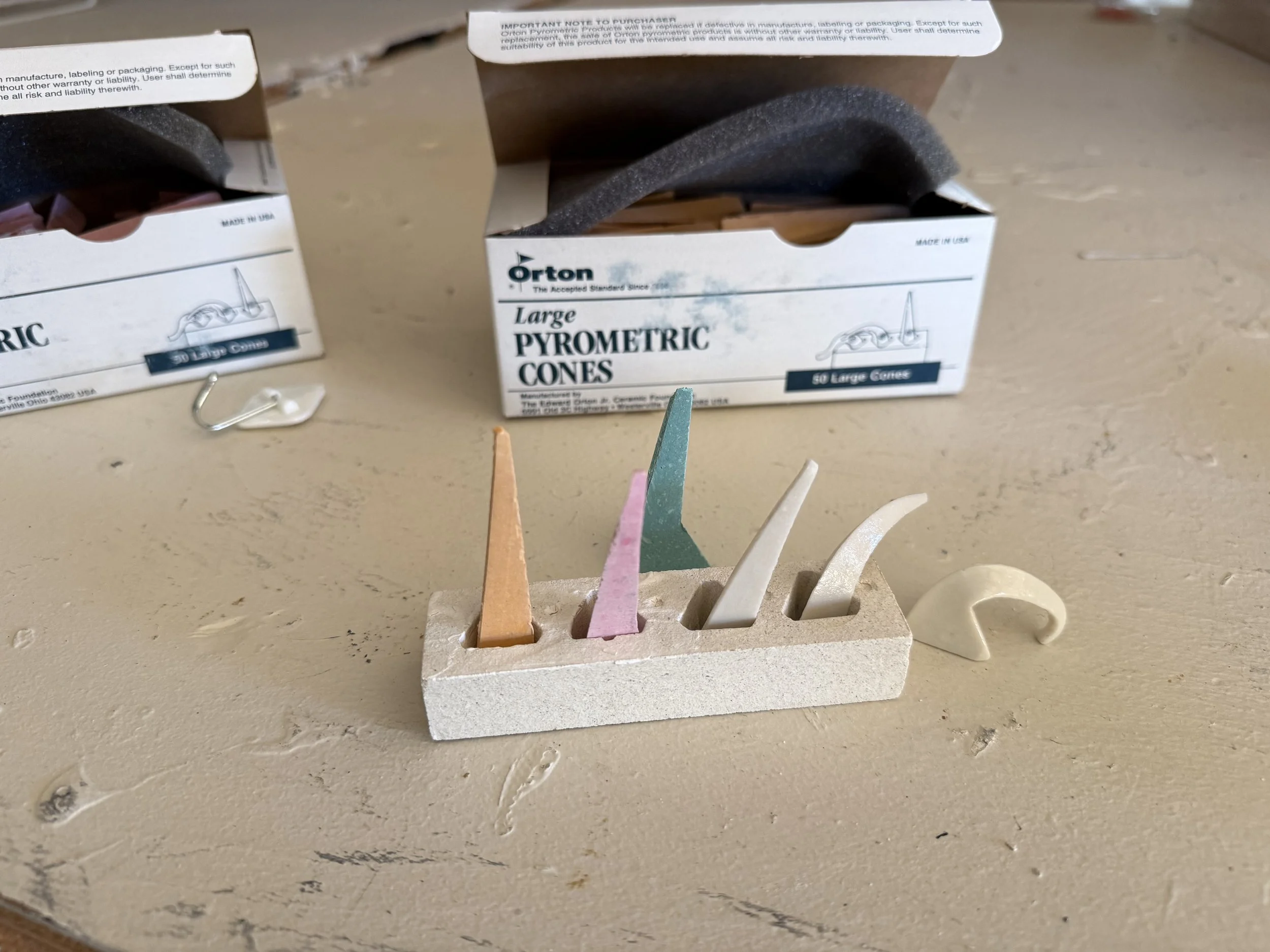
Beyond the basics, it has some pretty neat safety features. The coolest is the “kiln sitter”, a mechanical device that automatically shuts the kiln off once it’s reached the heat-work required for the firing. Heat-work is a product of heat and time, measured most accurately by pyrometric cones placed inside the kiln. These cones are made out of clay specifically formulated to melt after being exposed to a certain temperature for some amount of time. (Below: pyrometric cones of different values before and after a firing.)
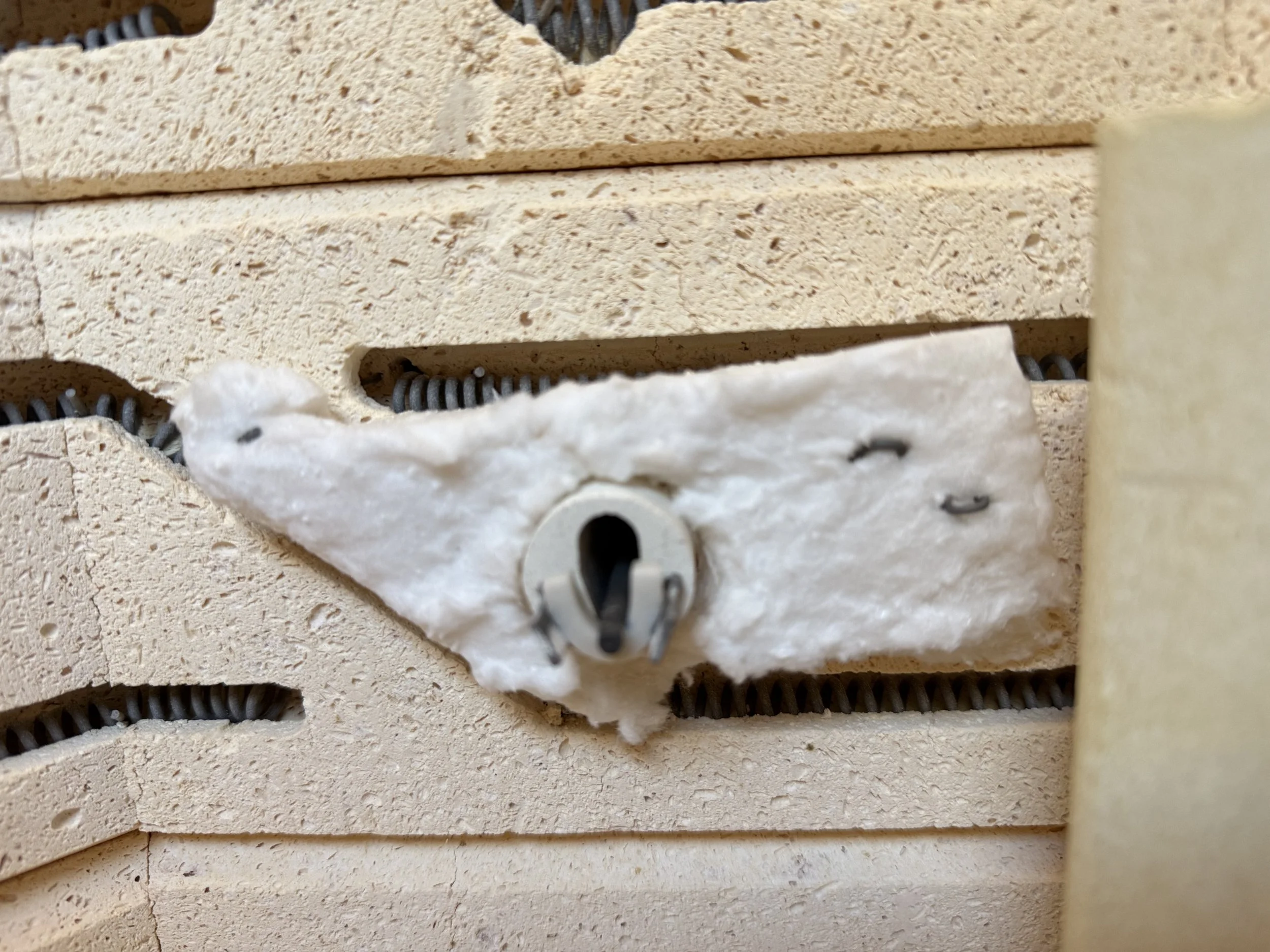
The kiln sitter has a metal “sensing” bar that goes through the kiln wall. On the inside, this bar rests on a small pyrometric cone that melts as it reaches the target temperature. When the cone has bent sufficiently, lowering the bar inside the kiln, the part of the sensing bar on the outside of the kiln lifts to release a falling weight that turns off the kiln. The “sensing” bar actually has no sense; it’s just a seesaw. (Below: the kiln sitter after firing with melted pyrometric bar. Also, a little repair of the firebrick around the kiln sitter using ceramic blanket.)
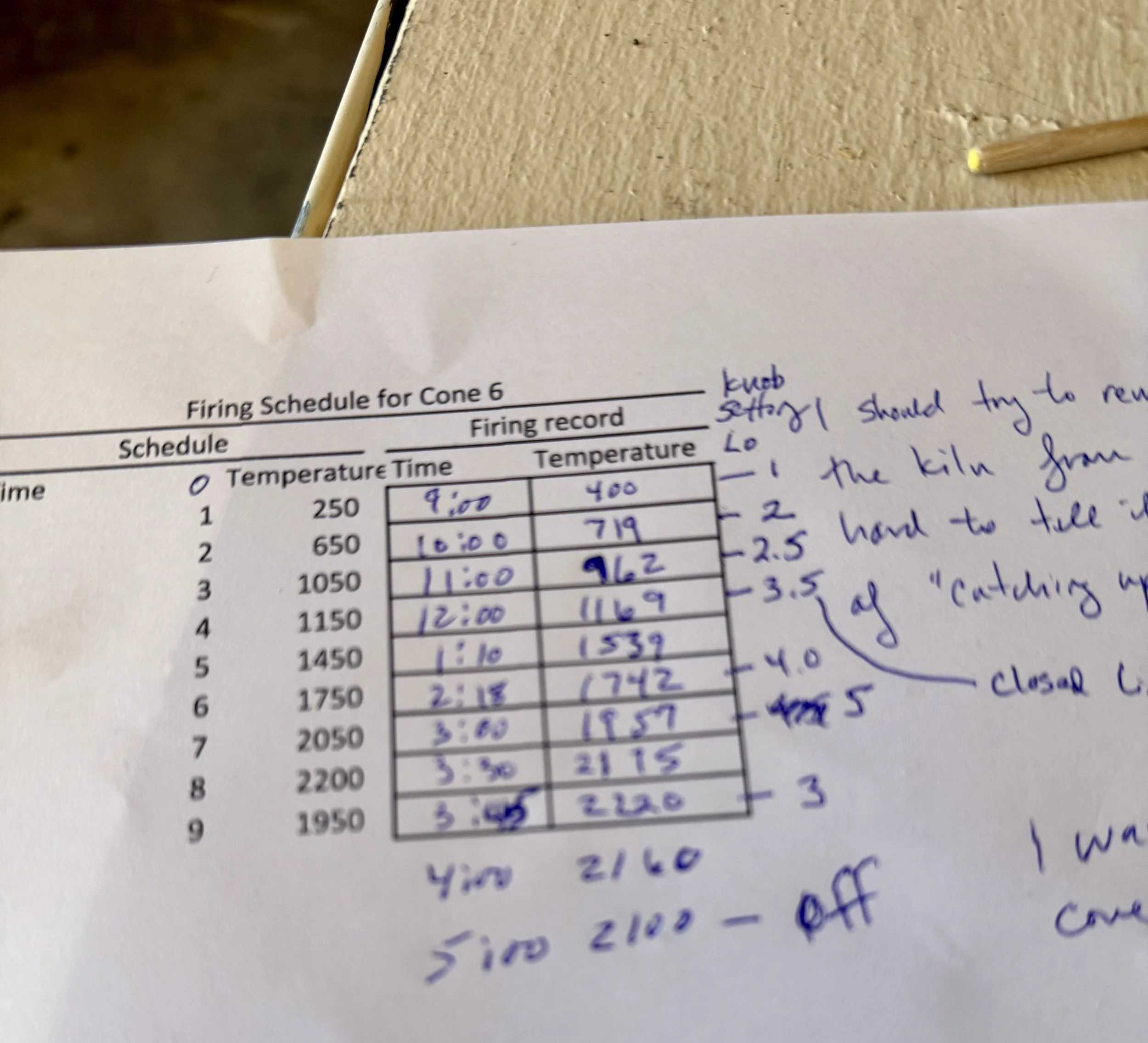
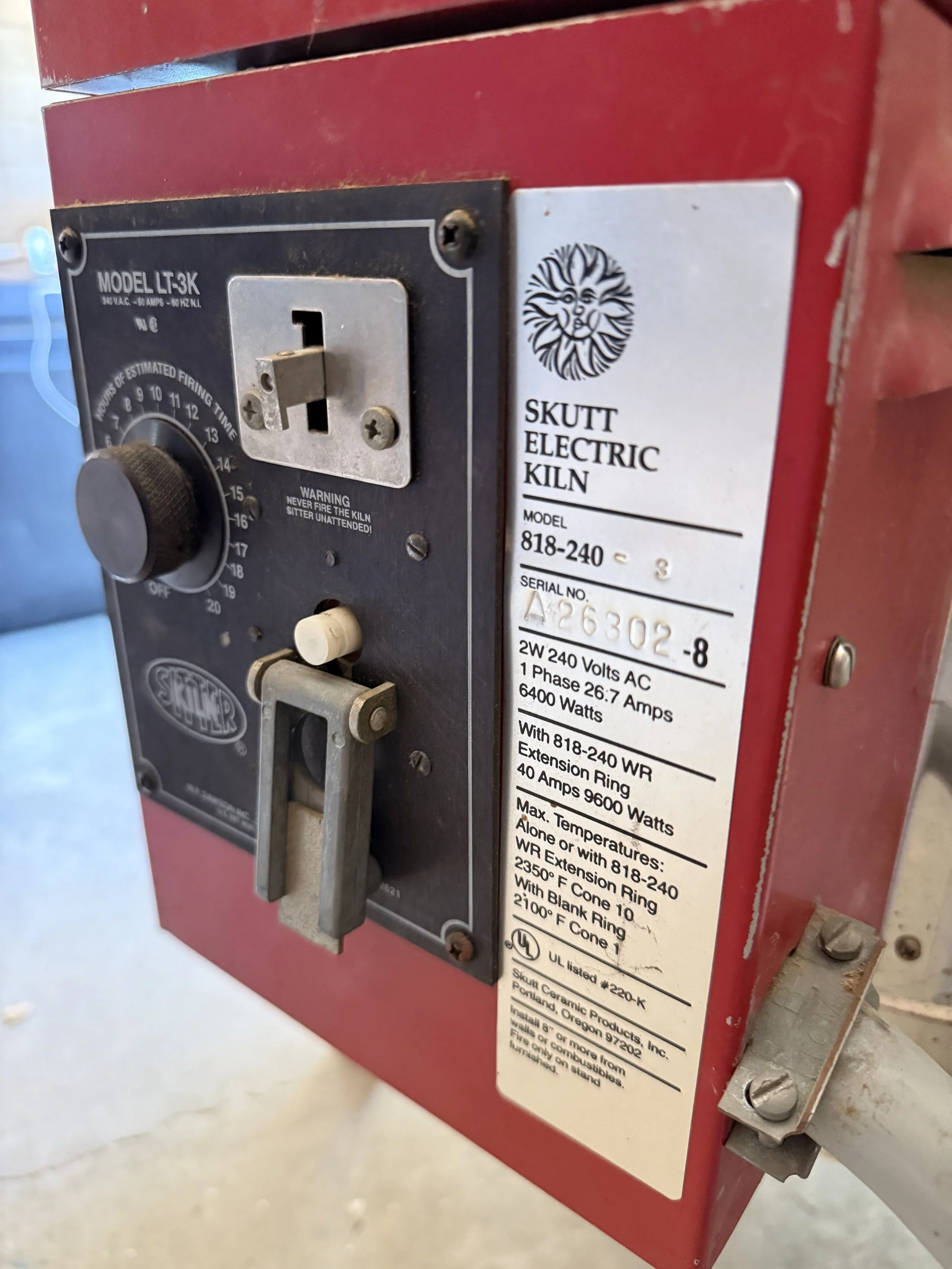
As neat as this is, I don’t fully trust it and have also a pyrometer stuck in one of the peepholes to monitor the temperature inside the kiln as it fires. One firing the kiln sitter tripped within 10 degrees of the goal. On the next, it never tripped. Who knows what might have happened had I not been closely tracking progress. When you invite the fires of hell into your basement, it’s good to have both a belt and suspenders. (Below: the outside of the kiln sitter with the falling weight down. )
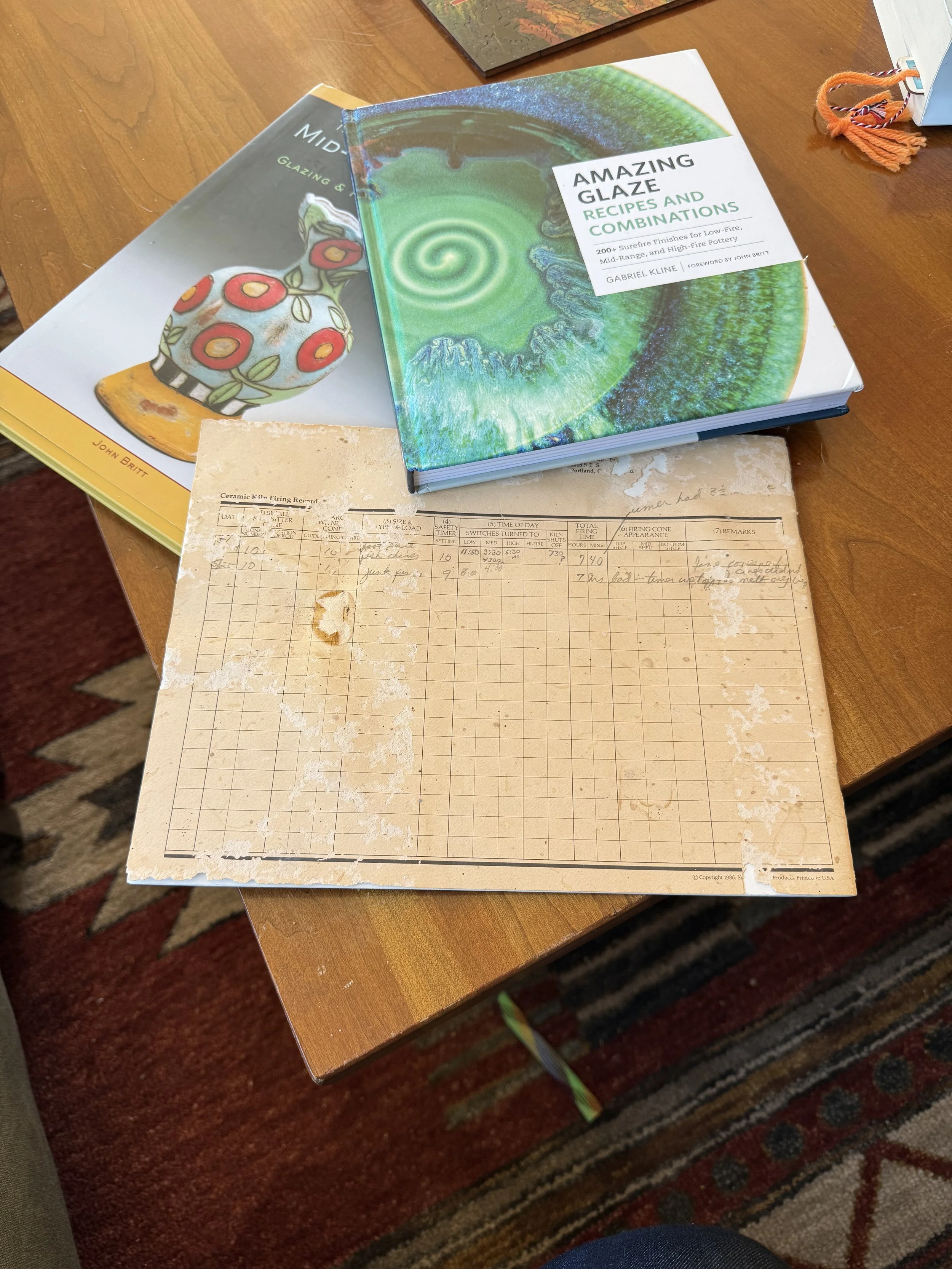
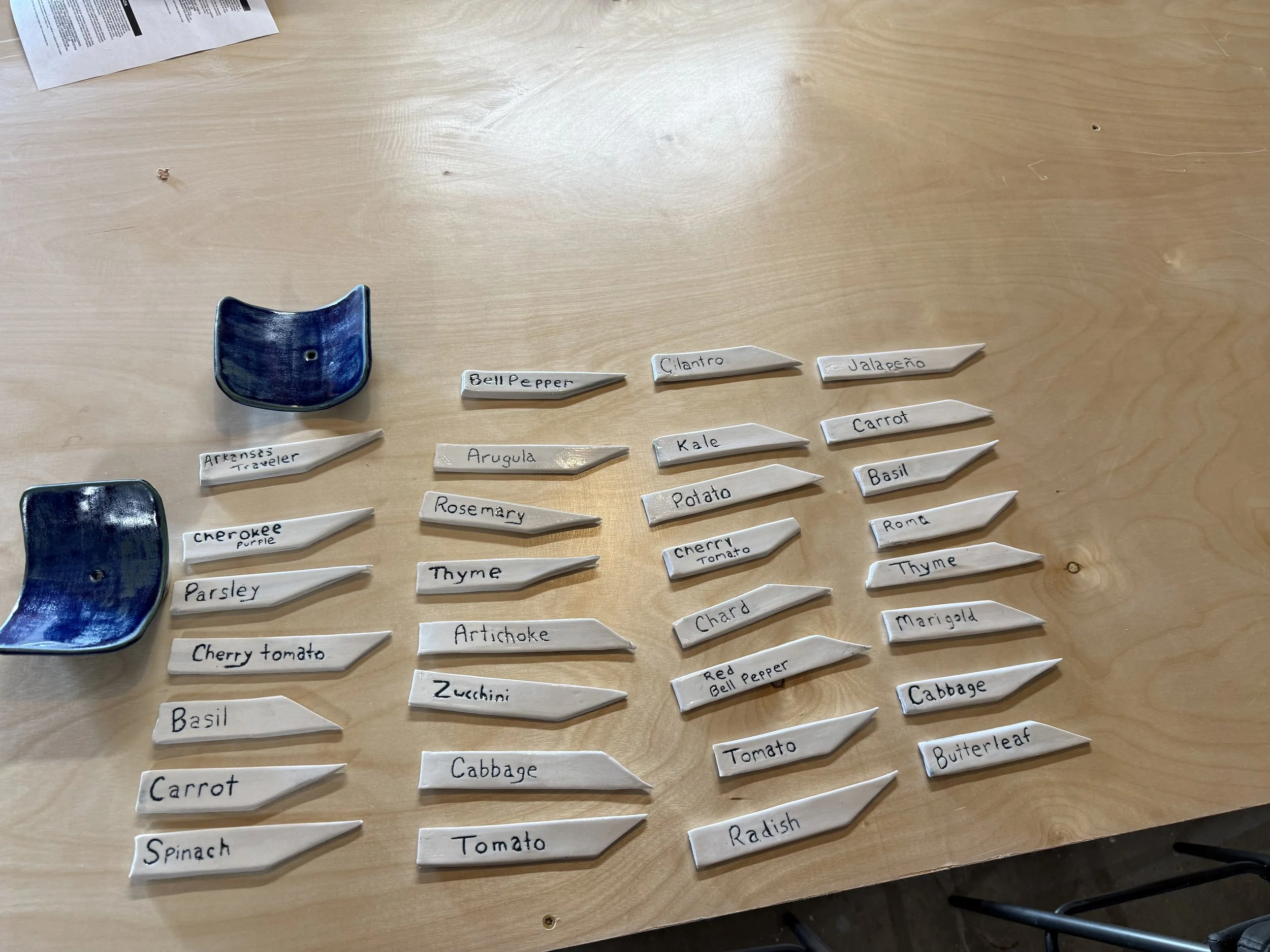
Firing my work allows me the opportunity to explore making my own glazes. Robert gave me a couple of books for my birthday that are helping me get started. Some dry ingredients to make glaze recipes are on their way to Chula Vista. In the meantime, I’ve finished the garden markers and a couple of sponge holders with a fun pre-mixed brush-on glaze.